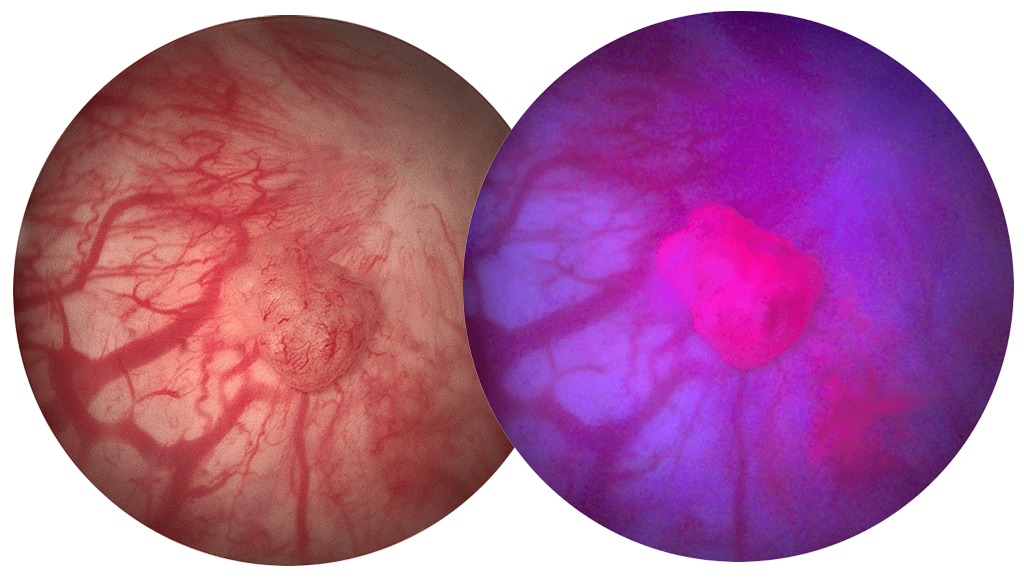
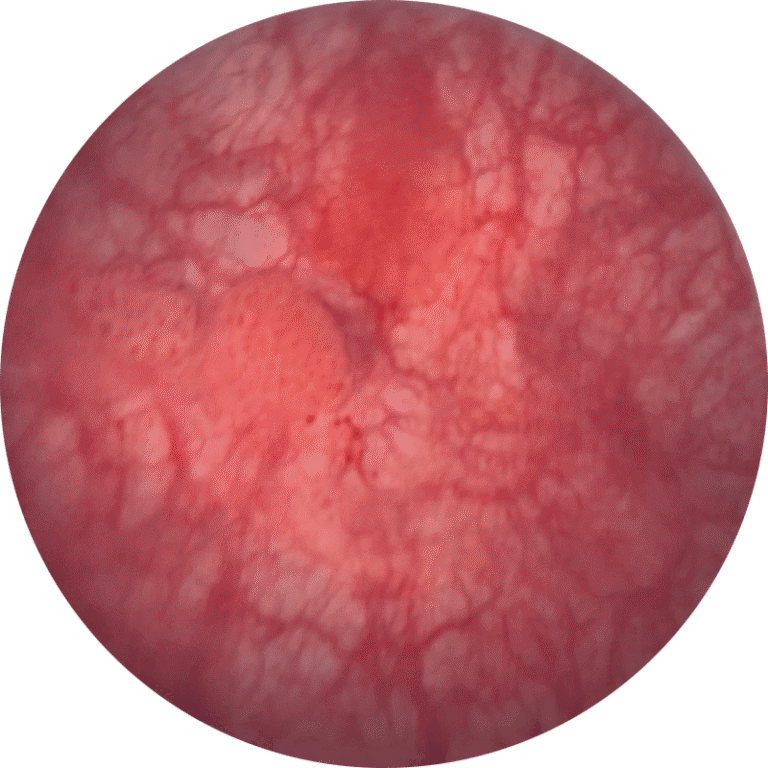
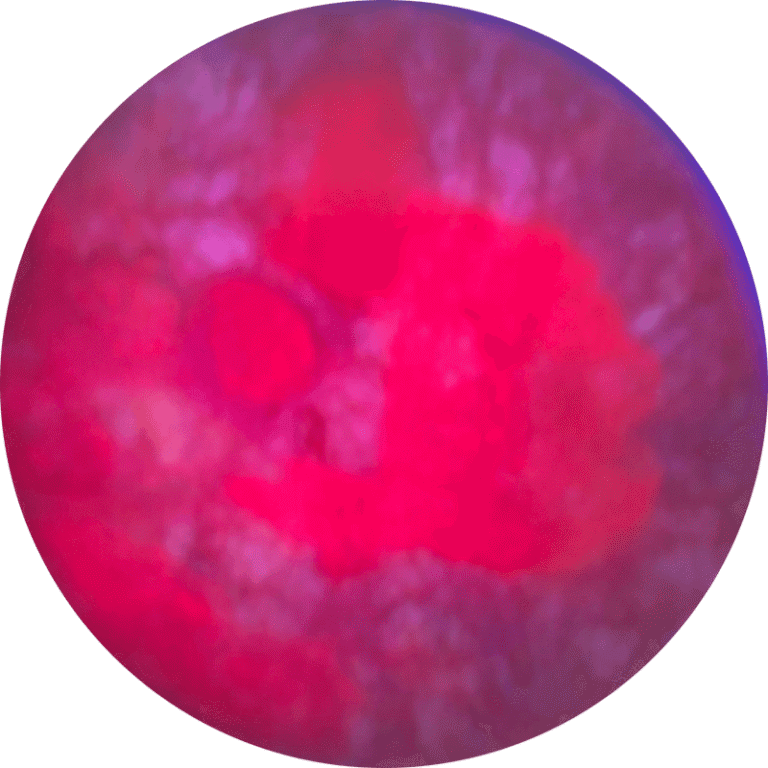
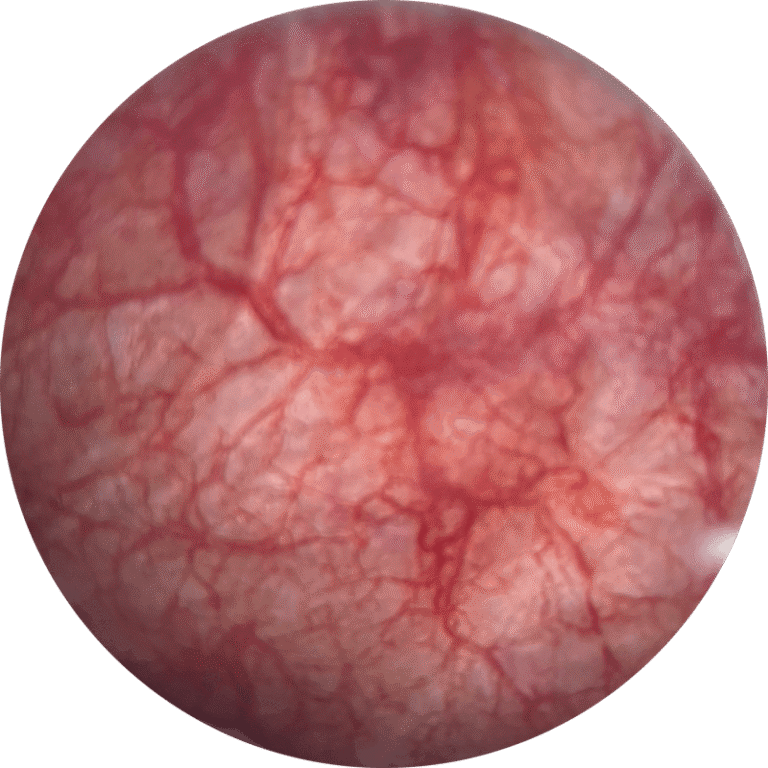
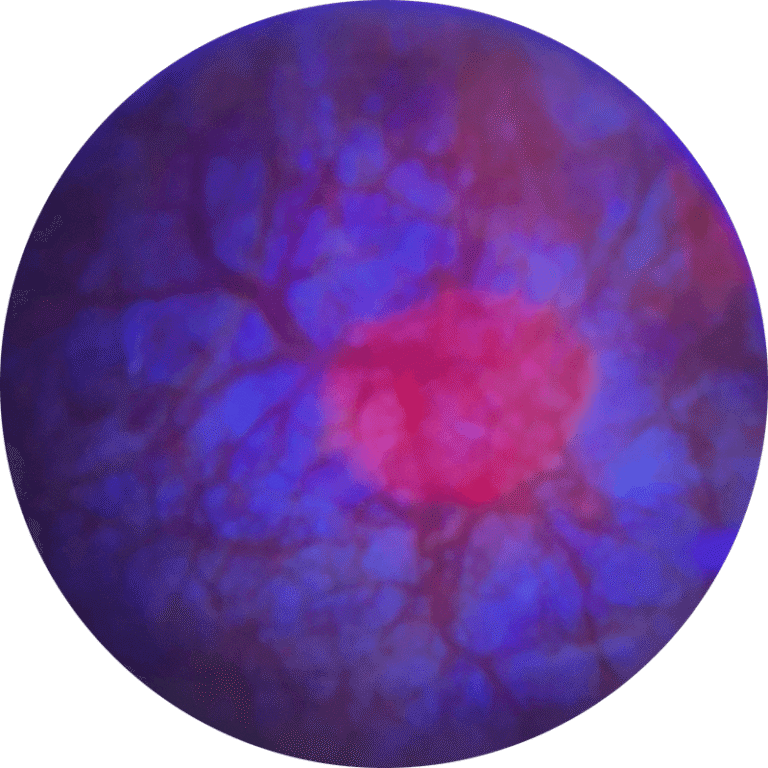
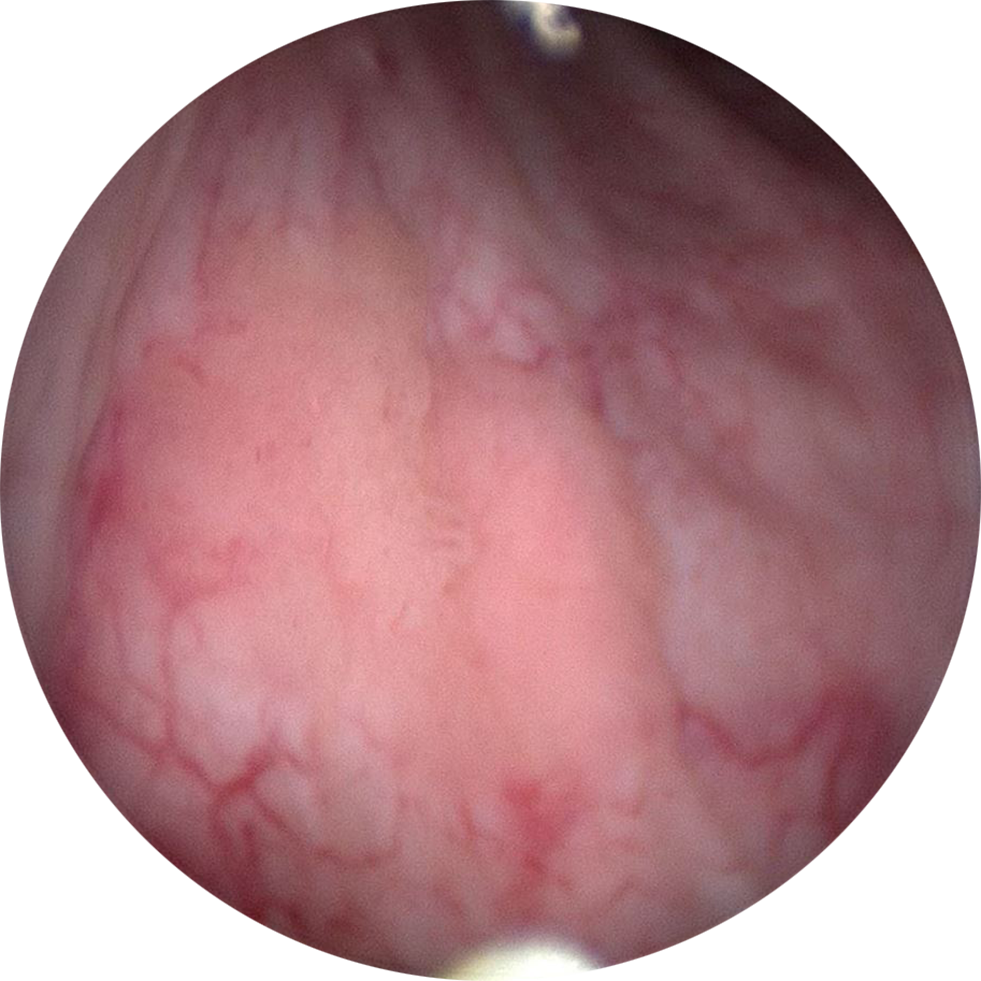
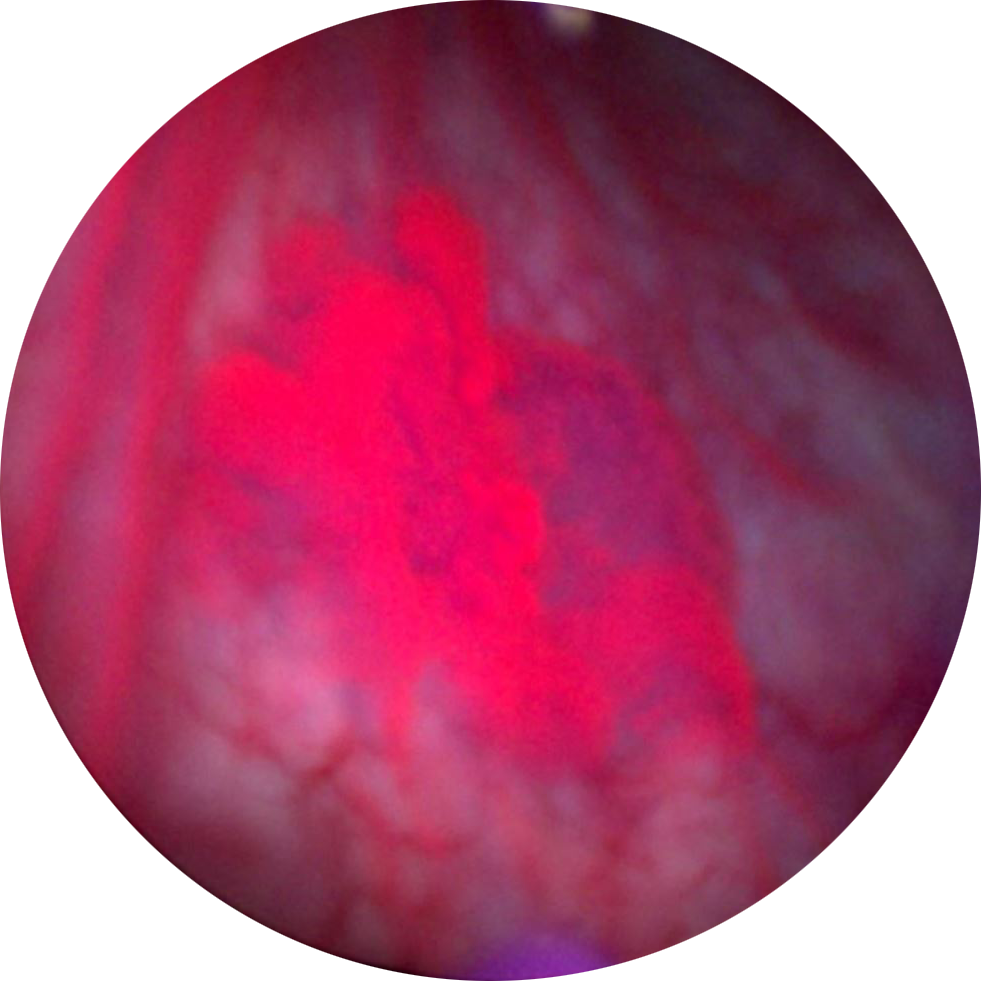
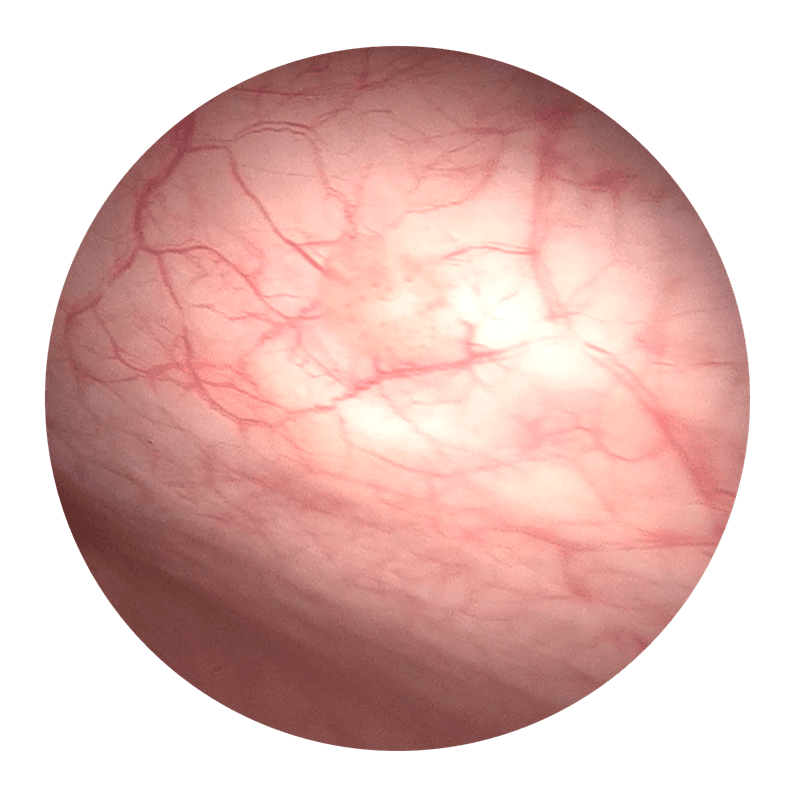
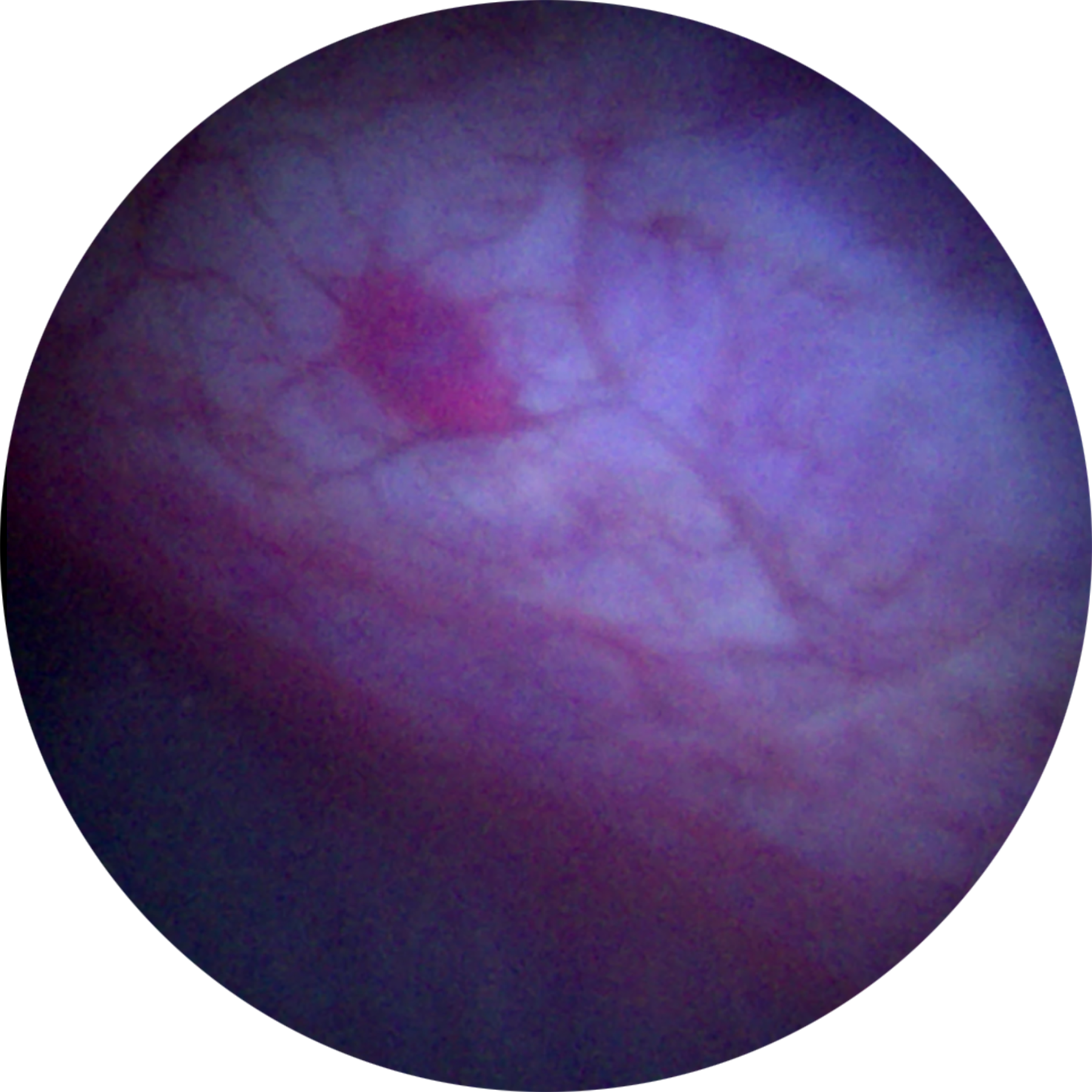
Cysview is a pharmaceutical product that makes non-muscle invasive bladder cancer (NMIBC) tumors glow bright pink under blue light during a cystoscopy.1
Indication:
Cysview is indicated as an adjunct to White Light Cystoscopy in the diagnosis and follow up of non-muscle invasive bladder cancer, including carcinoma in situ (CIS), in patients with known or suspected bladder cancer to increase tumor detection.
Only approved cystoscopic equipment should be used, equipped with necessary filters to allow both White Light Cystoscopy (WLC) and Blue Light (wavelength 360–450nm) fluorescence Cystoscopy (BLC®). Training in Blue Light Cystoscopy with an approved Photodynamic Diagnosis (PDD) System is essential prior to the use of Cysview.
Why is there a need for Cysview®?
The standard technique for detection of bladder cancer, White Light Cystoscopy (WLC), can miss tumors that are there but not visible.2 When TURBT is performed with only white light, up to 75% of patients present with tumors at repeat TURBT.3 A complete TURBT is important in NMIBC management for accurate tumor typing, staging, grading that can impact diagnosis and the optimization of patient outcomes.2
How can Cysview® help?
BLC with Cysview:
Helps enhance tumor margins, increasing confidence in complete resection 4,5
Is the most studied enhanced cystoscopy with the only mechanism of action that targets cancer cells 1,6
Cysview® during TURBT
BLC with Cysview offers optimal diagnosis right from the first TURBT:
Detects more tumors than white light alone.1
Better detection may lead to appropriate risk categorization.7
Well established safety profile with over a decade of data1
The most common adverse reactions reported in patients who received Cysview (≤2% of patients):
Bladder Spasm
Dysuria
Bladder pain
Hematuria
No specific drug interaction studies have been performed.
References:
Cysview Product Monograph, Canada. Mar 21, 2024.
Chang SS Boorjian SA, Chou R, et al. Diagnosis and Treatment of Non-Muscle Invasive Bladder Cancer: AUA/SUO Guideline. J Urol. 2016;196(4):1021–1029. Amended 2020.
Cumberbatch MGK, Foerster B, Catto JWF, et al. Repeat Transurethral Resection in Non-Muscle Invasive Bladder Cancer: A Systematic Review. Eur Urol. 2018;73(6):925–933.
Daneshmand S, Patel S, Lotan Y, et al. Efficacy and Safety of Blue Light Flexible Cystoscopy with Hexaminolevulinate in the Surveillance of Bladder Cancer: A Phase III, Comparative, Multicenter Study. J Urol. 2018;199(5):1158–1165.
Witjes JA, Babjuk M, Gontero P, et al. Clinical and cost effectiveness of hexaminolevulinate-guided blue-light cystoscopy: evidence review and updated expert recommendations. Eur Urol. 2014;66(5):863–871.
Xiong Y, Li J, Ma S, et al. A meta-analysis of narrow band imaging for the diagnosis and therapeutic outcome of non-muscle invasive bladder cancer. PLoS One. 2017;12(2):e0170819.
Richards KA, Smith ND, Steinberg GD. The Importance of Transurethral Resection of Bladder Tumor in the Management of Nonmuscle Invasive Bladder Cancer: A Systematic Review of Novel Technologies. J Urol. 2014;191(6):1655–1664.
How It Works
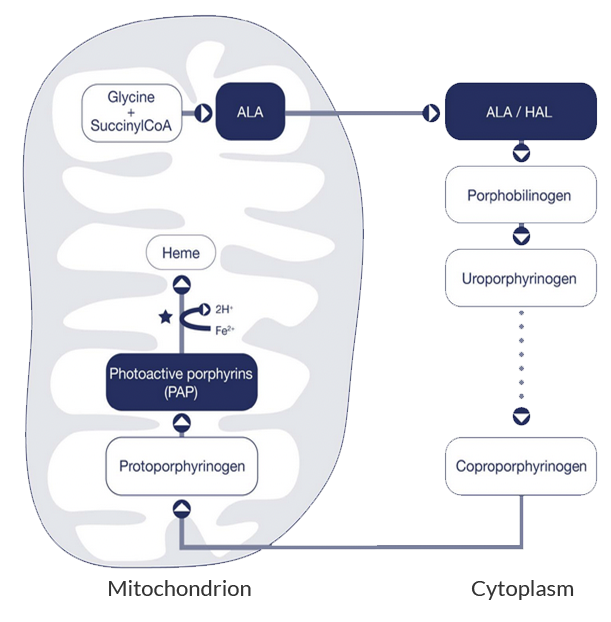
Mechanism of action pathway1
After instillation in the bladder, Cysview interacts with the heme biosynthetic pathway.
Selective intracellular accumulation of photoactive porphyrins (PAP) takes place.
PAPs preferentially accumulate in rapidly proliferating neoplastic cells.
After one hour, sufficient PAPs accumulate.
Under subsequent blue light illumination, neoplastic cells fluoresce bright pink.
Reference:
Wachoska M, Muchowicz A, et al. Aminolevulinic Acid (ALA) as a Prodrug in Photodynamic Therapy of Cancer. Molecules. 2011;16(5):4140–4164.
How Cysview (hexaminolevulinate HCl) is metabolized in cancer cells